
What Fruit and Vegetables Are in Season in the UK? A Month-by-Month Guide
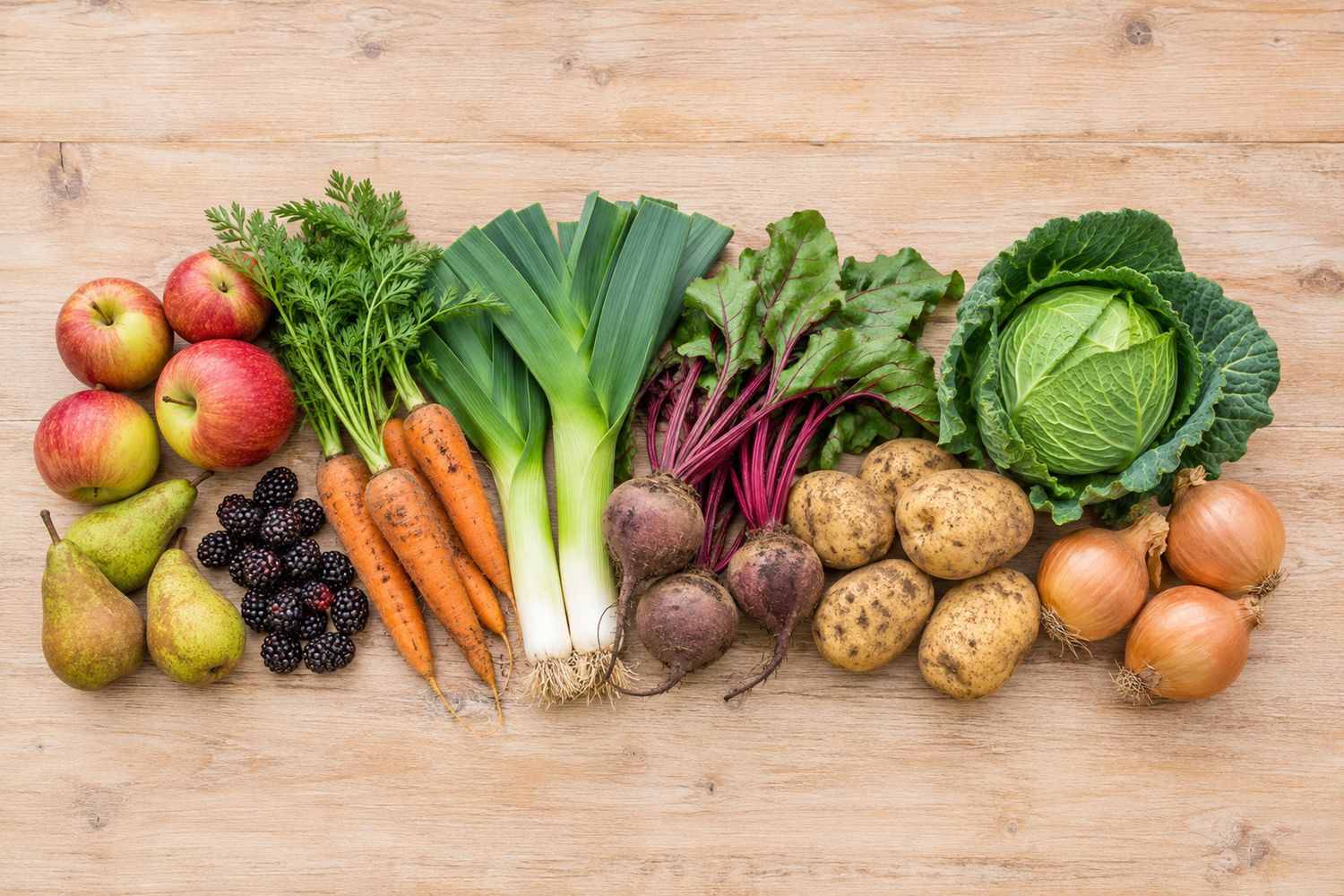
Produce picked in its natural season, close to home, has more flavour and usually costs less. This is a guide to when British-grown fruit and vegetables are at their best. Seasons shift a little with the weather, so treat the months as a guide.
Winter - December to February
Vegetables: Brussels sprouts, parsnips, swede, leeks, kale, savoy cabbage, celeriac, carrots, stored potatoes and onions. Fruit: stored British apples and pears, and forced rhubarb from January. Citrus from southern Europe is at its best now too.
Spring - March to May
Vegetables: purple sprouting broccoli, spring greens, spinach, spring onions, radishes, and from late April asparagus and Jersey Royal new potatoes. Fruit: outdoor rhubarb. This is the leanest time for British fruit, known as the hungry gap.
Summer - June to August
Vegetables: broad beans, peas, courgettes, runner beans, lettuce, tomatoes, cucumbers, new potatoes, beetroot and sweetcorn from August. Fruit: strawberries, raspberries, cherries, gooseberries, blackcurrants, and plums from late summer.
Autumn - September to November
Vegetables: squash and pumpkins, leeks, cauliflower, main crop potatoes, carrots, beetroot, and the first sprouts and parsnips. Fruit: British apples and pears, plums, damsons and blackberries.
Why does seasonal produce taste better?
Fruit and vegetables that ripen naturally and travel a short distance can be picked later, when their sugars and flavour have developed. Out of season, the same crop has usually been picked early to survive a long journey.
Where can I buy what is in season?
The year in more detail
January and February. The coldest months are the best for hardy vegetables. Frost sweetens parsnips and sprouts, and kale, leeks and savoy cabbage are at their peak. Forced rhubarb, grown in the dark in Yorkshire, brings the first colour of the year. Seville oranges for marmalade appear for a few weeks in January, and blood oranges follow.
March and April. Purple sprouting broccoli and spring greens take over from the winter brassicas. Stores of British apples and root vegetables begin to run down. Wild garlic appears in the woods, and by late April the asparagus season begins, traditionally on St George's Day, 23 April.
May and June. Asparagus and Jersey Royals are at their best. The first broad beans, peas and salad leaves arrive, followed by British strawberries, gooseberries and the first cherries. The asparagus season ends on Midsummer's Day.
July and August. The most abundant months. Raspberries, currants, cherries and plums; courgettes, runner beans, tomatoes, cucumbers and sweetcorn. This is when buying seasonally is easiest and cheapest.
September and October. The apple and pear harvest begins, with dozens of British varieties. Plums, damsons and blackberries finish the soft fruit season. Squash, pumpkins, cauliflower and main crop potatoes come in.
November and December. Roots, sprouts, parsnips and red cabbage for the Christmas table. Clementines, satsumas, nuts, dates and cranberries arrive from abroad, and British apples and pears are still in fine condition.
What is the hungry gap?
It is the stretch in April and May when winter crops have finished and the new season's have not yet started. Before imports and cold storage it was the leanest time of the year. It is why spring greens, rhubarb and the first asparagus have always been so welcome.
What about fruit that does not grow here?
Bananas, pineapples, mangoes and citrus cannot be grown commercially in Britain, so they are always imported. They still have seasons where they are grown: citrus is best in our winter, mangoes in late spring and summer, and stone fruit from southern Europe from June. We sell bananas, citrus fruit, exotic fruit and melons and pineapples all year.
How can I tell what is in season when I shop?
- Look at where it was grown. British produce in the shop is usually in season.
- Look at the price. Whatever is plentiful is cheaper.
- Ask. A greengrocer will always tell you what is good this week.
Does eating seasonally save money?
Usually. When a crop is at its peak there is more of it, it has travelled less, and prices fall. It also wastes less, because fruit and vegetables picked at the right time keep better at home. Our guide to ways to save has more ideas.
Where can I find seasonal produce in Preston?
Our range follows the seasons: apples and pears, berries and cherries, rhubarb, root vegetables, peas, beans and asparagus and greens. A Fresh Vegetable Hamper is a good way to send someone the best of the moment.
About us
Banana King is a greengrocer at 12 Orchard Street in Preston with 100 years of fresh produce supply. Local delivery is free in PR0 to PR5 on orders over £10.
Our fresh fruit and fresh vegetables change with the seasons, and it is why our fruit hampers and fruit baskets have no fixed contents: we pack what is best on the day. To make the most of it, read how to store fruit and vegetables.
Questions? Call the shop on 01772 562114, Monday to Saturday, or see our delivery page.


